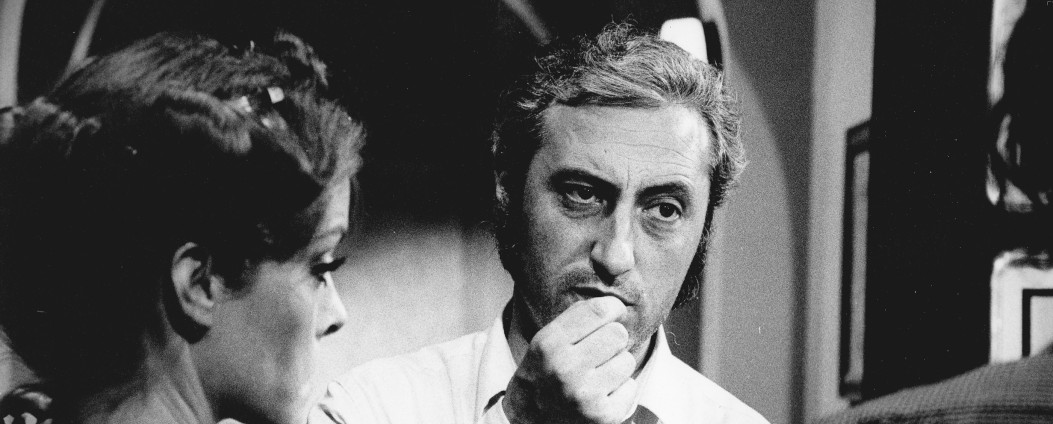
Remembering José Ulloa
The name of filmmaker José Ulloa (Madrid, 1934 – Caldes de Montbui, 2026) will forever be associated with the history of Spanish cinema thanks to his film Creation of the Damned (1974).
An apocalyptic science-fiction film that was hard to access and had a certain cursed aura about it, until its recent 4K restoration—and Blu-ray release—thanks to the Exorcismo: Defying a Dictator & Raising Hell in Post-Franco Spain box set, released by Severin Films a few months ago.
Despite the fact that his name is closely associated with this film, his first steps in the film industry date back to the 1960s, when he worked alongside the prolific Iquino in various aspects of his productions; he also worked as an assistant director on various westerns, Brandy (1964) and Manuel Esteba’s Twenty Paces to Death (1970); and as a production coordinator on Francisco Macián’s lysergic and one-of-a-kind Memoria (1976).
Diego López-Fernández - Direction Assistant
What were your early days in the film industry like?
Before directing Creation of the Damned, I had worked as an assistant director and script supervisor on about forty films, or maybe even more, which ranged across all genres: I could find myself working on a film starring Peret, such as Ramón Torrado’s Amor a todo gas, or on a war film with Craig Hill, as was the case with José Luis Merino’s When Heroes Die.
My entire career, prior to my opera prima, was focused on directing, right up until the very end of my time in the film industry, when I worked as executive producer on Terra de canons, a cursed movie...
I worked with Iquino on many occasions. He was tough, but it was worth working with him. Between stints as a production assistant, script supervisor, and assistant director, I worked alongside him on about fifteen films. He was kind enough to take me on for all his films, but he was a really tough guy… you’d think you’d earned his trust, that he was your friend, but that was not the case at all. And then there was his reputation for being stingy, but if he told you twenty, he’d pay you twenty; on the other hand, there were others who’d tell you twenty and then pay you nothing.
During this period with Iquino, did you get the chance to make your debut behind the camera?
Yes, but I didn’t like the screenplays he offered me to direct. The first thing I always do is read the script; that’s essential. When I read the one for Juventud sin freno, I thought it was a dud, really bad, but even so, I said to myself: “I don’t like the script, but Jorge Rivero is the leading man, I don’t know Puerto Rico, I don’t know Mexico, come on, let’s do it!”. I took a chance, and the movie turned out to be a bit of a hybrid, an adventure film that aims to be socially conscious through its portrayal of youth, but even so, it’s still a dud. But the ones Iquino offered me were all total duds. If I’d gone ahead and accepted the movies he offered me, I’d have a ton of duds in my filmography [laughs].
What genres did these scripts that Iquino offered you fall into?
Mostly crime films, and later, spaghetti westerns. With this latter genre, he built a solid foundation of co-productions with a group of Italians. It worked out well for him, because the Italians would pay him in advance, and he would use that capital to kickstart productions in Spain. Those films were very inexpensive and, on top of that, he finished them quickly and cheaply. He never stopped filming. There's even a movie on which I didn't participate, but I'm listed as an assistant director: The Reward's Yours... The Man's Mine, a western directed by Edoardo Mulargia, with whom I collaborated on another film, though I'm not credited in that one. It was a common practice; back then, they needed to include the names of various Spanish crew members to fulfill all the requirements and collect the subsidies.
How did the idea to make Creation of the Damned (1974) come about? And what was the reason that, despite working for IFISA, the film was financed by the legendary Profilmes?
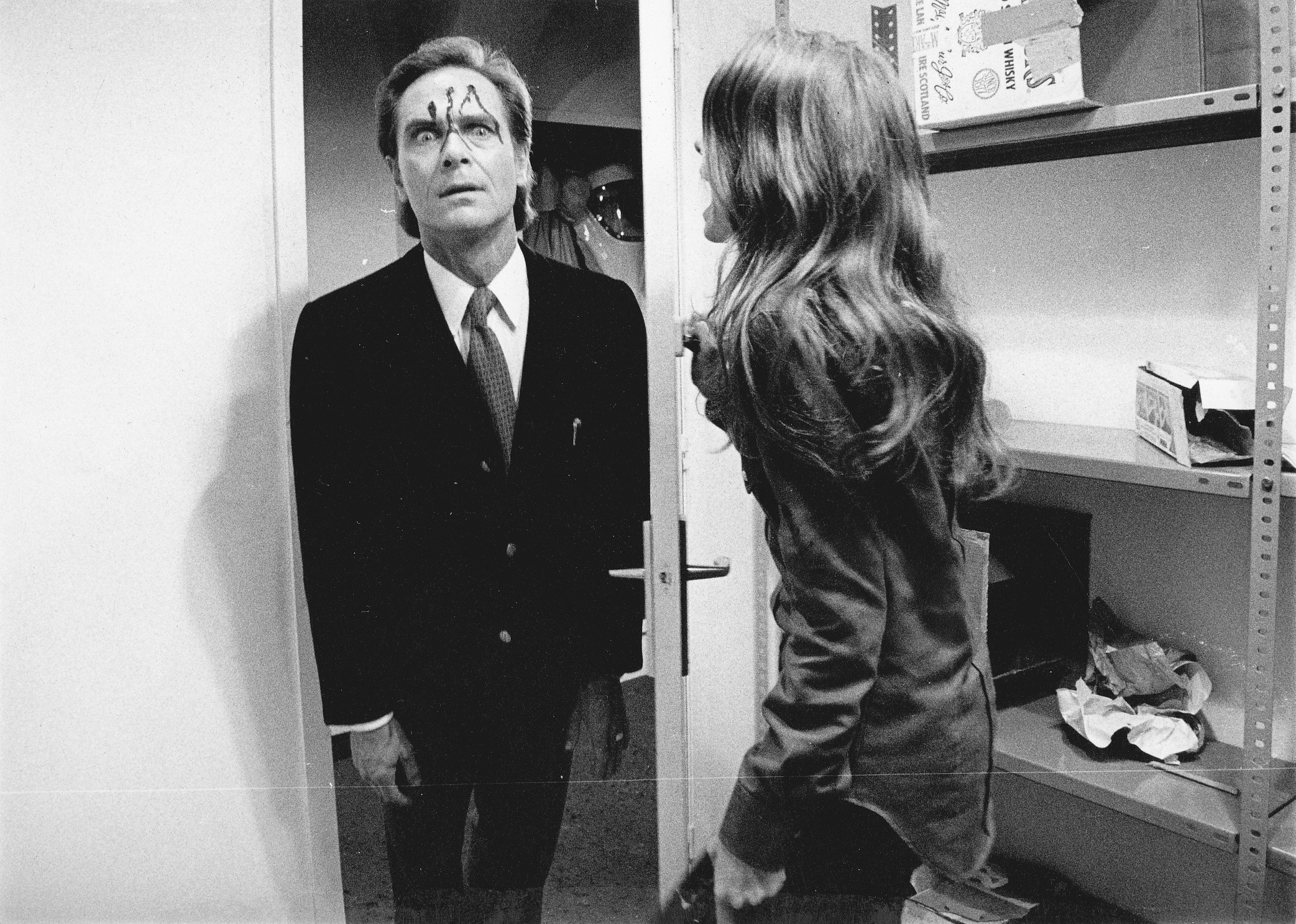
It was a film I needed to make at all costs. It was absolutely vital. With just five characters holed up in a shelter, I conceived it more as an Ingmar Bergman-style film than a Hammer horror movie. I started pitching the script to see who would produce it for me, since it was very low-budget. I went to seven or eight production companies in Barcelona and Madrid, and I always ended up getting a “no” for an answer. Since no one was interested, I started toying with the idea of making the film using my own resources. Coincidentally, one day I found out that there was a production company in Barcelona called Profilmes that specialized in horror films and described itself as the Catalan Hammer. I visited Ricardo Muñoz Suay and Josep Anton Pérez Giner; they liked the script, and I didn’t even have to insist. The next day they said: “We’re going to make the movie”, and I was stunned, because I’d been trying to get the film off the ground for two years, and suddenly, overnight…
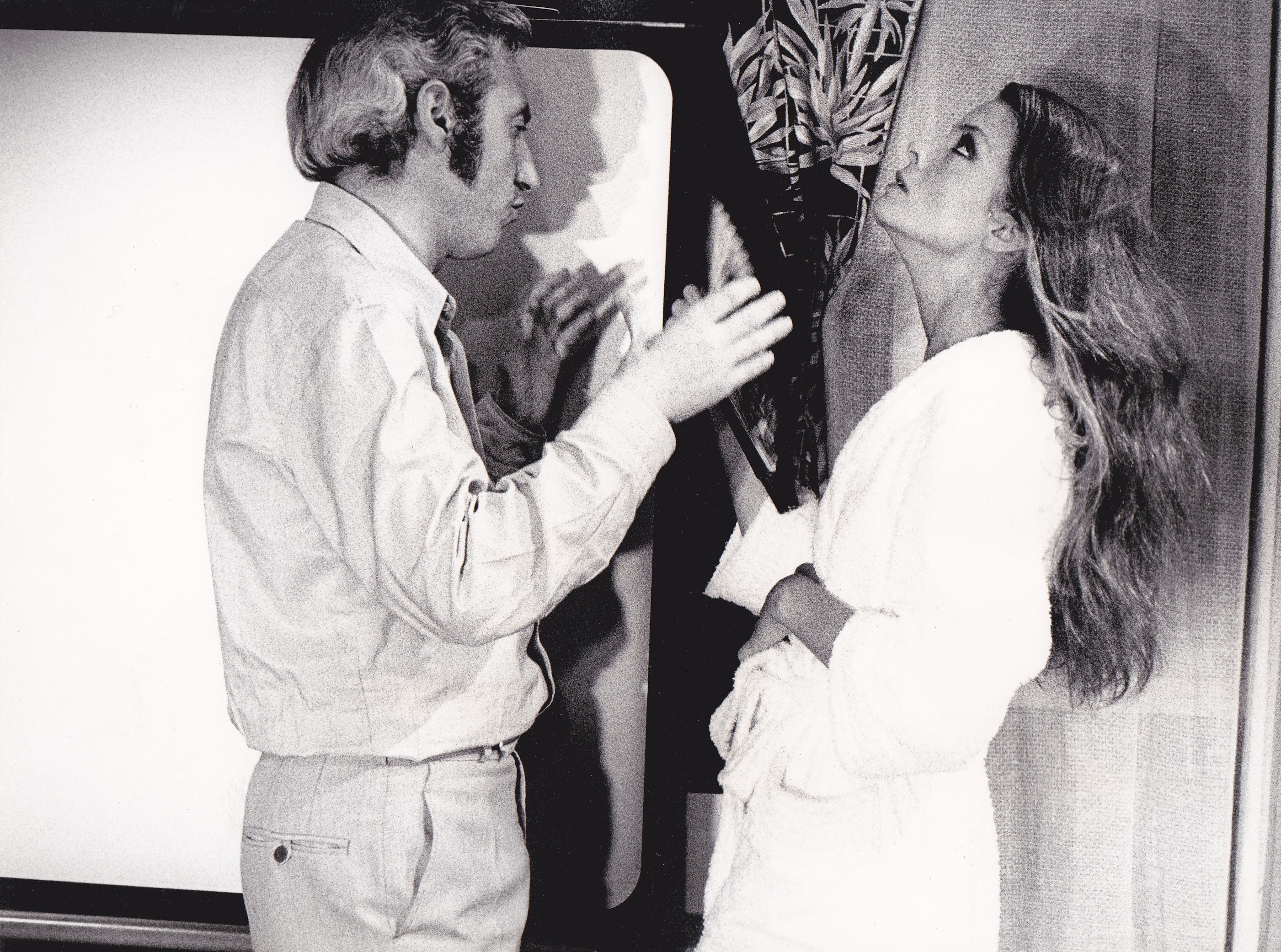
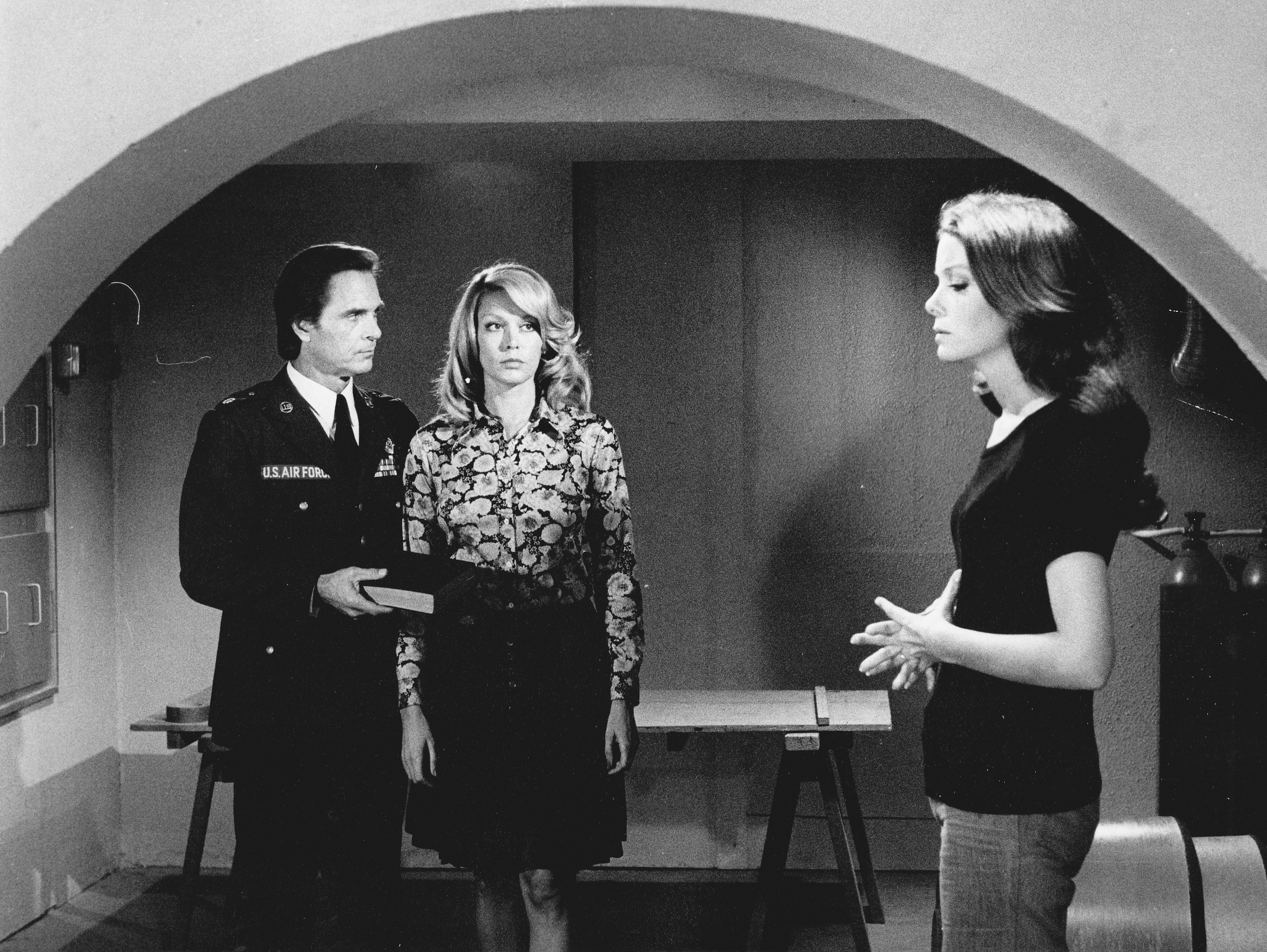
They proposed the idea of shooting it in English, and it sounded good to me. I suggested a cast of actors, including the American Craig Hill, Teresa Gimpera, and Patty Shepard, with whom I had already worked, and they accepted all of them. The film was made on a shoestring budget, under terrible time constraints, because we had to shoot it in twenty-three eight-hour days. We barely managed to finish filming properly due to lack of time.
Had you seen the fantastic genre films that Profilmes had produced up to that point?
I knew what Profilmes had financed, and I had seen the films, including Exorcism by Juan Bosch.
Did you change any aspects of that first script to give the film more of a science fiction feel so that Creation of the Damned would fit into Profilmes' catalogue?
I was a huge fan of Bergman, and I wanted—and believed—that Creation of the Damned could be a film very much in line with his filmmaking style. A serious, thoughtful film. I had to veer the film a bit more toward the fantastic genre due to Profilmes' signature style, but given the number of times the script had been rejected, I had already made that approach to genre. And that script that Pérez Giner and Ricardo Muñoz read didn’t differ much from the final film.
I shot the film in 35mm, but I wouldn’t have minded shooting in 16mm because of its aesthetics. I wanted to make a kind of B-movie; a small, modest, low-budget film, in the style of Roger Corman’s productions from that same period.
It partly captures this essence thanks to the presence of actors like Patty Shepard and Craig Hill; and the reduced, single setting...
This is true; moreover, they all started out as B-movie actors. Craig, who had even appeared in a John Ford film in a supporting role, was a B-movie actor.
Were you interested in genre at that time?
It wasn't fantastic genre; the film is psychological horror. It's about five people who are holed up in a fallout shelter.
Yes, of course, but I'm talking about the premise of the story…
The thing was, one day while talking with Cesare Zavattini, a very important screenwriter and the father of Italian neorealism, he offered me some advice—since by then I was very tired of my job as an assistant director and completely burnt out from collaborating on bad movies—saying: “Make a small film, but one that’s truly yours.“ And since I already had this story with just five characters, I said to myself: “That’s it!.” And that’s the one I made. Besides, when Zavattini gave me that piece of advice, I already had everything lined up, even the sets where we’d shoot the film, on Vallirana Street in Barcelona, at the Publivisión Studios. I had it all lined up, and I thanked him for that advice.
On the other hand, there was my personal dread of a likely nuclear war, with Russians and Americans pointing missiles at each other; that was the reality of those times.
So, did you end up shooting the film at Publivisión Studios?
Yes. Since I had previously worked on advertising projects at these studios in Barcelona, I immediately thought of them because of their capabilities and sets. And that’s where I shot the film, except for the exterior scenes, which I shot in the U.S.
I insisted to Pérez Giner that I wanted to travel to the U.S. for two reasons. The main one was to be able to shoot some scenes there, like the one where the actor Pedro Mari Sánchez ventures outside. In the end, the scene where the young man leaves the shelter was shot in both New Jersey (U.S.) and Bellvitge (Barcelona) [laughs]. Let me explain: the young man walking down the street is in Bellvitge; when he looks up and sees a sign, it’s New Jersey.
The second reason for my trip was to visit New York [laughs].
How many people traveled with you to the U.S.?
The actor didn't even go; I had to go alone. Pérez Giner told me he didn't have the budget to send two people to the U.S., so I couldn't even go with the cameraman. Giner offered him a pay cut so he could go with me, but the cameraman told him he wouldn’t go under those conditions. So Giner asked me if I dared to go alone; I said yes, that I’d swim there if I had to, and I traveled by myself without knowing any English.
When I arrived in New York, I stayed at the Hotel Commodore, a hotel that I later found out was where all the gangster movies were filmed in the 1930s. Once settled in, I went to the front desk to speak with a person from Cuba and ask for a Spanish-English interpreter. Two hours later, the interpreter arrived at the hotel's front desk. I went to meet him, a young, blond man, and I stood there staring at him and said: “I know you.” I asked him if he’d been to Spain; he said yes. Then I asked what he’d done in Spain; he told me he’d been studying and eventually worked as an extra in Westerns. I said, “Of course! You and I had lunch together in Hoyo de Manzanares during a José Luis Borau film!”. Sure enough, we’d coincided on Brandy, Borau’s debut feature. So he worked alongside me in the U.S. He was very nice to me, and the seven days I was there were absolutely perfect.
I rented the equipment from some Germans. I asked them how much it would cost to rent all the equipment for three days, and they said $3,000, an amount I didn't have. I made them a counteroffer, and we finally settled on $1,500, which was exactly what I had, since I didn't spend much on food; I only ate donuts because the restaurants were very expensive.
We can say that, in terms of storyline, Creation of the Damned was also highly innovative within Spanish filmmaking, given that prior to it, we could count on one hand the number of films where the story is set in the aftermath of a nuclear holocaust. It was precisely after your film that other entries in this subgenre appeared, such as The People Who Own the Dark (León Klimovsky, 1975) or Spectrum (Beyond the World's End) (1977), directed by an old acquaintance of yours, Manuel Esteba. In a way, you’re a pioneer…
A film had previously been made called On the Beach, directed by Stanley Kramer, which dealt with this subject. And before that, in Spain, a few isolated films had been made, such as El sótano by Jaime de Mayora or Noventa minutos (Ninety Minutes) by Antonio del Amo, and even, brace yourself, a film by Mariano Ozores that dealt with this topic…
Yes, La hora incógnita (1963).
Exactly. It wasn't at all successful and was the only serious film Mariano Ozores ever made. By the way, I worked with Mariano as a script supervisor on a really charming little comedy called Chica para todo (A Girl for Everything).
Have you ever had the chance to see The People Who Own the Dark or Spectrum (Beyond the World's End)?
Yes, and both of them even have a certain connection to my film.
I may have made a mistake with Manuel Esteba… I worked with him on Twenty Paces to Death; I was an assistant director and had to finish it, because Manuel had to leave the shoot due to depression. Manuel would show up on set, but he couldn’t shoot, so in the end Iquino told me to finish it, which Manuel didn’t take well at all. The fact is, I shot more than half the film, but I never wanted to be credited or even be mentioned. It just so happens that I had already told him about the script for Creation of the Damned, and maybe that’s where his film came from, but I think Spectrum is a dud, both bad and boring.
The People Who Own the Dark had several points in common with my film. I had been an assistant director to Klimovsky, and I don’t actually like this particular film; I also find it boring. Although it did have one interesting aspect, but thanks to one of its screenwriters, Joaquín Jordá, a good screenwriter; as a director, he made several very interesting films.
True, The People Who Own the Dark has several points in common with Creation of the Damned, besides being a good movie.
In my film, coincidentally, people don’t go blind or die, and there’s a reason for that. Back then, there was a bomb called the Neutron Bomb, which killed people but didn’t destroy anything, although it did disintegrate them, which is what happens to Pedro Mari Sánchez as he runs outside.
I wanted more people to be in it, but I could only fit one bed with two corpses. When I boarded the plane to go to the U.S., I had bought half a skeleton from an anatomical supply store, the upper half, with the intention of placing it in a window in New Jersey. But since I’d seen the movie Lady Liberty, where Sophia Loren isn’t allowed to enter the U.S. with a mortadella sausage, I figured they wouldn’t let me in with a skeleton either, so I set up a huge cover story along with the travel agency, and that was that.
Getting back to your film, a striking feature is the pessimistic view you cast on humanity through the microcosm formed by your main group of characters…
Well… There’s also a girl, played by actress Patty Shepard, who is pregnant, and we don’t know who the father is, although we suspect it’s the young man, who, when he goes outside, places his hands on his belly as a sign of hope that a new generation will be born through her.
There’s also a thinly veiled criticism of the military establishment in what is the film’s best and most unsettling scene, when characters Hilbeck and Hill set about devising a strategy for the next war, without even knowing if there are any other survivors of the nuclear holocaust. Was that your intention?
Well, yes, I really like that scene as well because it is very representative of what the human race is, of how bellicose we are, of the fact that they still don't know how things are going outside and they're already thinking about launching guerrilla attacks and counteroffensives.
Since we’re talking about the small but outstanding cast, it’s essential to talk about one of its stars, actor Pedro Mari Sánchez, who, shortly afterwards, would be signed up for a film very similar to yours called La casa (Angelino Fons, 1974). Taking into account the striking similarities between the two films, what exactly happened?
Pedro Mari Sánchez was always convinced I wouldn’t make this film, even though I’d already written the script. I approached him while we were shooting a western that also starred Craig Hill and spoke to him about the film I wanted to make, though I wasn’t sure when. I told him I was counting on him for one of the lead roles and gave him a copy of the script. I think then that, because of his age, eighteen, or his inexperience, or the audacity of being young, he took that script and copied it. So, he “made” a movie, originally entitled La cárcel (The Prison), with a script penned by Pedro María Sánchez III, a name that seemed too suspicious to me, and behind which I eventually discovered was him.
I spoke with attorney Miserachs to determine what I could do, but he wanted to charge me a million pesetas to take on a lawsuit against Pedro Mari Sánchez. Obviously, I didn’t have that kind of money to invest in a court case like that. Ultimately, I had a few phone conversations with Pedro Mari and decided to drop the matter…
Both films were shot practically at the same time, weren't they?
Mine was filmed first; I finished shooting it on September 23rd, 1973; and La casa was filmed in January 1974.
I saw La casa later on and found it very boring. To rework the script and set it apart a bit from Creation of the Damned, they introduced a team of screenwriters, including the film’s director, Angelino Fons, along with a few others. They moved the setting of my film to the skies, since it took place in a space capsule. And besides that, their cast was very weak, featuring people like Magda Konopka or José María Prada.
Did you ever discuss this issue with Fons?
No, but he was a good filmmaker. He made a very good film called The Search.
It seems that Creation of the Damned had a disastrous distribution. What was the reason for that?
It premiered first in small towns and provincial cities, and by the time it hit the capital cities, what happened was that the prints had been worn out and damaged from so much screening that they were unsuitable for further screenings, and since making new prints was very expensive, it barely premiered in capital cities at all. That’s why it ended up being labeled a cursed film in Spanish cinema. And all because of having given distribution rights to the worst distribution company in all of Barcelona, Belén Films. A small-town distribution company.
I went to see the man representing Belén Films, and when I asked him why they weren’t distributing the film in Barcelona, he told me that all the copies he had had been damaged after the screenings in so many towns. I mentioned this to Profilmes, and they told me, “well...”
Do you feel that this ultimately hurt your future career as a director?
Whoever saw the film really liked it. As a matter of fact, Bigas Luna got into filmmaking precisely because he saw Creation of the Damned…
Tell me more…
One day I invited him to a film lab for a private screening of Creation of the Damned; he really liked it, especially the film’s claustrophobic and sordid atmosphere. That experience later led him to pursue a career as a director and to reach out to me as an advisor for his opera prima. Bigas Luna called me and offered me the position of technical advisor on Tatuaje; subsequently, that offer evolved into my directing Tatuaje. But I ultimately realized that Bigas actually wanted to direct the film himself, which was only natural, since he was even financing it himself along with a friend of his. When I observed that there could be certain complications during filming, I decided not to make the film and told Bigas that he should direct it himself. Meanwhile, I stayed on as a consultant for a while, but Bigas was already upset with me; he took what I said as an offense. However, and unintentionally, I also helped him with Bilbao, as I came up with the idea of shooting the film in 16mm so the cinematography would have a more documentary feel; I also helped him hire Isabel Pisano. Bigas had spoken with her on the phone before sending her the script. When Isabel received it, she told him she didn’t do pornographic films. So I intervened and told Isabel that Bigas was an amazing guy, but not a porn director. Ultimately, she came to Barcelona and shot the film under Bigas Luna’s direction.
And then there was Consol Tura, who had been Bigas' wife and with whom he still maintained a very good relationship. I liked her a lot; she was an unattractive but enigmatic woman, a woman with a strong personality and a certain charm. One day it occurred to me to tell Bigas that if he didn't make a movie with Consol, I would, and she ended up starring in Caniche.
I'm guilty of usually being very communicative with people. If I hadn't told Bigas this, he wouldn't have thought of it.
Returning to what we were discussing earlier, and setting aside its poor distribution, how did Creation of the Damned fare at film festivals?
It was selected to be screened in Trieste (Italy). The festival director told me she had really liked it and that they were going to include it in their line-up. When I arrived, there were a lot of people, but neither Pérez Giner nor Muñoz Suay were there, despite having been invited… Teresa Gimpera, on the other hand, hadn’t been invited. Juan Luis Buñuel was also there with his film Expulsion of the Devil. One of the jury members even confessed to me that if Patty Shepard had attended, she would have won the award for best actress. However, the response from audiences and critics was rather underwhelming.
It was also screened at the IMAGFIC, the Madrid International Festival of Imaginary and Science Fiction Film, although I was unable to attend, and in Molins de Rei, where I received both very good and very bad reviews from various newspapers; I still have the clippings. And years later, in SITGES, it was screened in a retrospective alongside a film I really like: Black Crown, by Luis Saslavsky.
Taking into account the golden age that fantastic and horror films were experiencing in our country, didn't you consider continuing in genre with another project? I understand you had a screenplay called Zenia, which was also rooted in the fantastic…
Yes, it was a project I developed together with screenwriter Luis de Torres Espuny, with the idea of continuing my career as a director in the fantastic film genre. We rewrote the script several times; it was about an alien invasion of Earth, a story rooted in science fiction, but in the end we didn't make it, because I didn't see any commercial potential in it.
And continuing to work for Profilmes?
Profilmes ultimately treated me unfairly. To be more precise, Pérez Giner… At first, he was the person who trusted me, but we started shooting on a Monday, and on Wednesday he took off to Brazil for a month, without realizing all the things that had happened during the shoot. The production manager, for example, even went so far as to hide the blank tape from me so I couldn’t shoot. It turns out he was pissed off at me because one day I called him out. He would stand in front of us during rehearsals and time how long we were taking. The actors complained, specifically Teresa Gimpera, and I had to talk to him. From then on, he was at odds with me throughout the entire shoot.
I had to organize the last day of the shoot myself. Pérez Giner’s instructions were very clear: the film had to wrap on a Friday, and anything shot after that would not be covered by Profilmes. So I approached the crew and asked them if they could help me out. Thanks to their cooperation, we were able to shoot the scene of Pedro Mari Sánchez running and disintegrating in Bellvitge.
The budget issue also led to some further shenanigans. The film was supposed to cost four and a half million, and they told me that if it cost a single penny more, I’d have to pay for it out of my own pocket. So I saved as much as I could from my trip to the U.S. and brought $200 back to Spain, which I returned to Profilmes. In the end, there was money left over from the film. So, as you can see, I didn’t want anything more to do with Profilmes.
What a piece of work, the Catalan Hammer…
And I also had problems with the music, but that wasn't Pérez Giner's fault.
I had chosen Juan Pineda, an excellent musician, to compose the music. I met with him and explained what I wanted, but he wrote me some music that was rubbish. We went to record it at some studios in uptown Barcelona, with ten or twelve musicians; the music was already composed. He had one of the musicians play a piece, and I just stood there dead serious, as if someone had dumped a bucket of cold water on me. Pineda asked me if I liked it, and I replied “Not at all. " He told me it was already done and that I had to use it, and on top of that, he said that if we didn’t record it right then, we wouldn’t be able to record it because the session was ending. I told him that if I left without recording it, I’d have problems at Profilmes, so I had no choice but to settle for that music.
We agreed to meet the next day at four in the afternoon at the Balcázar recording studios to edit the footage and add the music. Pineda didn't even show up. So I had to look around the studios for an editor, a young guy who helped me even though I didn't know him at all. I still don't like the music.
Did you have problems with the editing as well?
I had more freedom during the editing process. They hardly got involved at all.
In other words, a tug-of-war with Profilmes…
After all this, Pérez Giner made it clear to me that he didn't care about cinema, that he was just a businessman. And ultimately, the film turned into a whole host of incidents.
Previous content
SXSW2026 With Fantastic Genre Taking Center StageNext content
Remembering Michele Massimo Tarantini